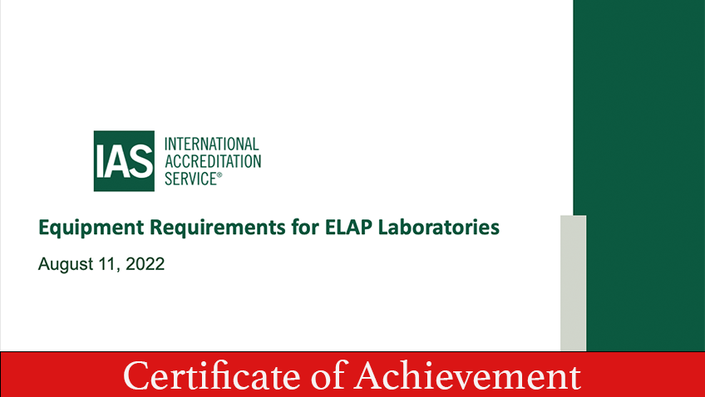
ELAP Webinar 19 - Equipment Requirements for ELAP Laboratories
Equipment Requirements for ELAP Laboratories
Equipment Requirements for ELAP Laboratories
Synopsis:
Laboratories must rely on equipment to obtain quality data and increase efficiencies of operation. This webinar will focus on the proper set up, use, and record keeping of laboratory instruments and support equipment. We will discuss calibration, verification, and traceability of equipment to increase confidence in the data. We will explain the differences between reference standards and reference materials and the associated requirements. This webinar will be useful to laboratory management, supervisors, and quality assurance staff.
Outline:
- Introduction
- Proper equipment setup and calibration
- Requirements for traceability and record keeping
- Reference materials and reference standards
- Maintenance programs
Good news!
This webinar course includes a Certificate of Achievement and compliant CEU units—a great reward for completing the program.
And as the saying goes: great rewards come with greater responsibilities. Because CEUs follow strict compliance rules, you’ll need to complete each lesson exactly as required (the required steps are shown inside each lesson).
If you don’t complete the required step, you won’t be able to move on to the next lesson.
Your Instructor
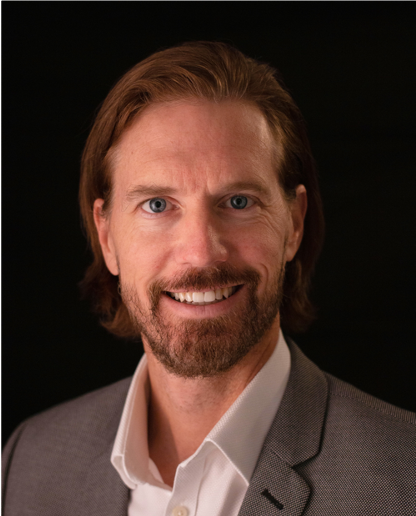
Dr. Francis has extensive experience in chemistry and biology. He is currently a principal with SAW Environmental (2004 to present). He was owner/operator of a large environmental laboratory in Nevada prior to becoming a full-time consultant. He performs and manages third‐party laboratory audits for several states, QA/QC consulting to individual laboratories, and provides internal audits, data integrity training, and data validation to private and governmental laboratories. Dr. Francis is a contract assessor for IAS assessing laboratories to ISO/IEC 17025 and various TNI Standards. He is a fully qualified NELAC assessor in organic and inorganic chemistry, microbiology, cryptosporidium, radiochemistry, solids, aqueous, tissue, and air. He is an EPA-approved drinking water certification officer in all areas available.